S01e00 An introduction to Lifepod
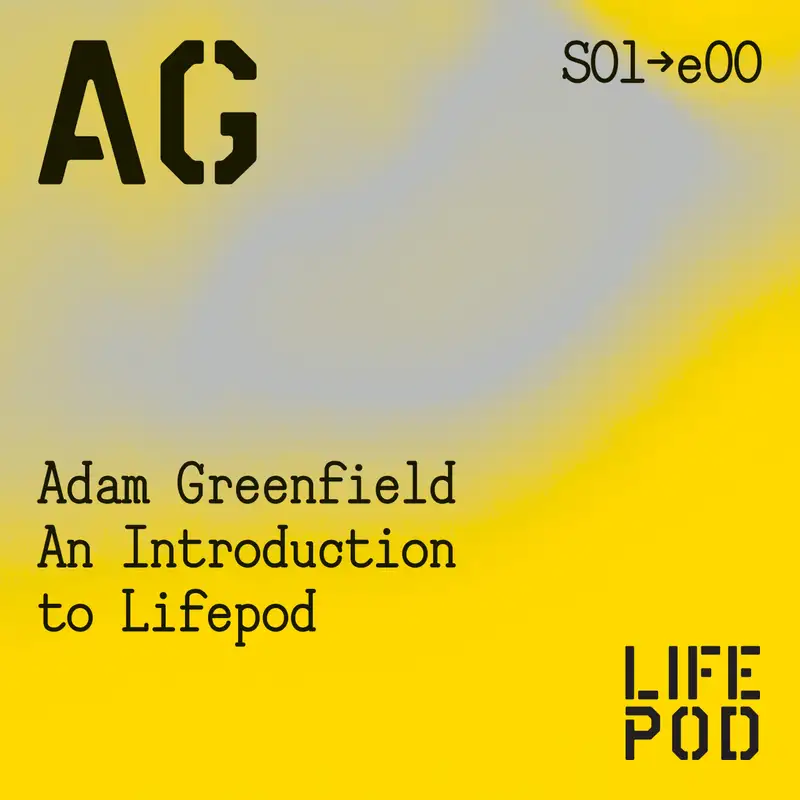
Lifepod S01E00
An Introduction to Lifepod
Air date: February 27th, 2026
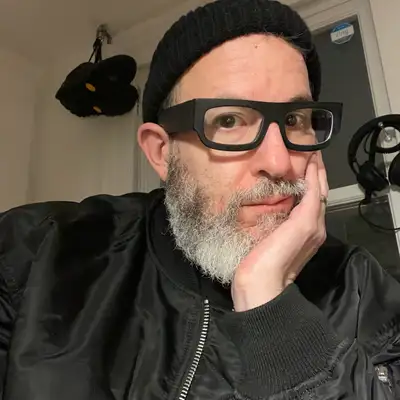
Adam Greenfield: Welcome to Lifepod, the podcast about taking care of ourselves in a world on fire. I’m your host, Adam Greenfield, and in this first episode I’d like to give you an idea of what you can expect from the show and the conversations we’ll be having here.
The prehistory of Lifepod begins in 2024, when I published a book called Lifehouse: Taking Care of Ourselves in a World On Fire. Lifehouse was an attempt to do two things. First, to try and come to terms with the grim specifics of the situation we now collectively find ourselves in as a result of global heating, a situation I called “the Long Emergency.” And secondly, and I think much more importantly, to figure out how we might organize ourselves to get through that Emergency together, intact in body and soul.
So what is the Long Emergency? As I think of it, it isn’t simply about the climate. It’s an extended excursion from everything we’ve come to accept as normal, of as-yet unknown duration and resolution, during which many of the familiar systems and structures that currently shape our lives will be flung to pieces by the force of events.
Yes, this has its casual roots in the heating of the atmosphere caused by our burning of fossil hydrocarbons over the past two and a half centuries. In our heedless transgression of planetary boundaries, in the breakdown of the global climate system, and in our consequent departure from what some ecologists regard as the “safe operating space” for Earthly life. And yes, this means that part of what we’re now forced to deal with are the obvious, climate-driven events — the storms, floods, heatwaves, fires and droughts most of us are now confronted by, in one way or another, on a semi-regular basis.
But still more so, the Long Emergency involves the follow-on, second- and third-order effects of global heating. And this means events which may not seem, at first glance, to have much of anything at all to do with the weather.
A whole litany of conditions, actually. I’m thinking of things like resource wars.
Mass population movement — refugee surges on a scale far exceeding those we associate with events like the end of the Second World War, or the Partition of India.
Resurgent nativisms, too, and vicious ethnonationalisms of every stripe.
The erosion, progressive degradation and, in many places, outright collapse of the infrastructural systems that undergird high-complexity contemporary life.
The increasing difficulties we’re having in securing clean food and safe drinking water, even in the heart of advanced, affluent societies.
Crop failures and die-offs.
The return of infectious disease as a determining factor in ordinary lives.
Things which are admittedly less critical, but still feel like genuine weights on the quality of life, like the steady, progressive reduction in the variety of things we might expect to find on our grocery-store shelves.
And just about everywhere, amidst all this, the contraction of the state, and its consequent withdrawal from provision of the material and, broadly, pastoral care our parents and grandparents considered to be a matter of course.
Together these things make an interlocking, mutually-reinforcing, cascading pancrisis that, as I say, extends into almost every realm of our lives. The political, the economic, the infrastructural; the social, psychological and emotional. Even what we might, for want of a better term, think of as the spiritual. The Long Emergency inflects all of these things, and, I believe, it will continue to do so for the remainder of the lifetime of everyone now living.
There’s something else I think we need to get our heads around, though. It’s that this pancrisis will in fairly short order exceed the capacity of our social, technical, political and economic systems — in other words, what many of us would think of as planetary civilization — to contain it. And that as a result, the greater part of that civilization’s familiar ways of ordering everyday reality, whether enacted through mechanisms of state or market, simply will not survive.
I’m not expressing any opinion, at this very moment, as to whether any of that should survive — whether it might yet be reformed, repaired or made just, or whether it has earned the benefit of the doubt in any of these respects. I’m simply saying that it’s not likely to survive, not in any form that we recognize. This is our world now. These are the skies under which we will live out the rest of our days. And I think the sooner we recognize and accept that, the better off we’ll be.
But the point of the book wasn’t really to lay all of this out, in some sadistic, gleefully morbid catalogue of ascending awfulness.
The point of the book was that only by understanding the actual magnitude of the trouble we’re in could we begin to devise effective strategies intended to counter it. Being clear and honest about the full peril we’re in might help us sketch out some ways in which we might organize ourselves not merely to survive these years, but to do so with values of care and dignity and justice somewhat intact.
Maybe it would begin to suggest practices and tactics that other communities under pressure have used to persevere against hard times, and come out not merely as some recognizable semblance of who they were when they entered the tempest, but as people with new insights, new depths and new capacities.
Maybe we could learn to think of this time of climate-system breakdown not as something that happens to us, but as something we can actively intervene in, and for the better.
It’s easy enough to imagine, I suppose, surviving even the collapse of civilization if your strategy involves arming yourself to the teeth, and holing up in some remote bunker with the others wealthy and paranoid enough to have made such arrangements ahead of time.
Or thinking of “civilization” as a flotilla of lifeboats, where the price of survival is maintaining eternal vigilance at the gunwales — stamping on every hand that reaches up for help, and making sure no one else can haul themselves onboard.
What’s harder to imagine is making shelter against the hard times that’s capacious enough for everyone who needs it. That chooses trust in our own strength over passivity, invitationality over exclusion, and love over fear. That both calls on and nurtures qualities in us we’d almost given up any dream of developing, and maybe even tutors us in joys we’d never thought to claim as our own.
But it’s precisely because all of that is, currently, maybe a little difficult for most of us to imagine in any depth or detail that it felt necessary to dig up some stories about the times and places in which people have done things like this before. And so telling some of those stories was the task I set myself in Lifehouse. I thought of it as “conducting salvage operations.”
So in the book, I followed the Black Panther “survival programs” of the early 1970s, which were so much more extensive and ambitious in their care of body and soul than I think most people realize. I explored the mutual-aid efforts that now, happily, seem to spring up in the wake of just about every natural disaster, as we’ll get into in some depth in just a moment.
I interviewed people about their experiences of the self-organized kitchens and clinics and pharmacies of Crisis-era Greece, the city-wide participatory governments of municipalist Spain, and the courtyard assemblies and “justice platforms” of Rojava — the wildly improbable anarchofeminist and ecosocialist society established in the majority-Kurdish cantons of northeastern Syria that has only so recently been met with what I think we have to regard as a final betrayal.
And all of this culminated in a proposal, a proposition, which I’d distilled from the lessons of all these communities and places and times: that we establish in each of our neighborhoods a Lifehouse, a physical shelter against the circumstances of the Long Emergency.
That we equip it as a place of care and refuge, able to generate power and purify drinking water and maybe even grow meaningful amounts of food, for when all our other means of getting access to those things have fallen by the wayside.
That we run the Lifehouse democratically, by open, participatory assembly of the people it serves.
And that we link each Lifehouse to all the others, in a distributed, federated network of neighborhood-scale hubs. And in this way establish a robust meshwork of self-organized provisions for care and collective empowerment that is able to see more of us through more of the terrible times ahead.
If this sounds suspiciously anarchistic to you, well, it should. At every level other than the most immediate, municipal scale, it’s true, the state is completely absent from all of these visions. But one important point I make in the book is that I have no wish to relitigate the fundamental disagreement that’s cleaved the left since the days of the First International. Nothing I have to say — in the book, at least — speaks to the question of whether the state can or should organize the lineaments of a just and dignified existence for all. I merely observe that in times of acute crisis the state has not been able to do so, or chosen not to, or even in many cases actively arrayed itself against the prospect of people being able to organize care for themselves. And given that, it seems to fair to ask whether or not it is particularly likely, in the circumstances we are in, to furnish us with the care we so desperately need at the moment we need it most.
The answer I keep coming up with — and maybe, if you’re here, that’s your answer too — is no. No, speaking from experience, I, at least, don’t think the state is terribly likely to be there for us, in the way we need it, in this time of Long Emergency. And that leaves us, and whatever care and shelter and power we’re able to make for ourselves, together.
This remains the vision guiding Lifepod. In the episodes to come, beyond following up on and hopefully deepening our understanding of the some of the stories I got to share in Lifehouse, I’m going to be reaching out to people who I think can help us understand what it takes to make that kind of shelter, and to become the kind of people who are better able to take on that burden amid all the other, existing obligations of our lives.
What we face together is terrifying, I get it. And that sense of terror can so easily be overwhelming. It can so readily generate in us a kind of lassitude, if we let it, a sense of our own powerlessness that makes us want to hunker down in a defensive crouch, and numb ourselves to everything that’s going on around us. I get all of that. But there’s something else we can do: we can take direct action to preserve the things we care about, and to the greatest extent possible sustain them against all the storms massing on the horizon.
Most of what you’ll hear on Lifepod will be conversations with folks who seem to me like they’ve developed insight into how we might go about doing so — conversations I sincerely hope you’ll feel invited to, and moved to participate in. Sometimes this may involve theory, at other times notions that are more immediate and concrete and practical, but in either case the guiding idea is that you’ll be able to take away something you can use in your own life and your own community.
§ I think at this point a lot of people still tend to identify this set of ideas with hope. “That’s such a hopeful thought,” they might say. And they invariably mean this as an affirmation.
To live in hope is an affective state that’s broadly prized in the left tradition, even exalted. Hope is what that tradition offers people when the hour seems darkest, the resources they’re able to call upon are few, and all the forces arrayed against them feel unassailable in their might. I think of the late San Francisco Supervisor Harvey Milk — an icon of progressive politics in the Bay Area, and of the struggle for gay liberation more broadly — who always used to say, “You gotta give ‘em hope.”
Would it surprise you to hear that I just don’t agree? Giving people hope may well be part of the job description, for an elected politician in a representative system. And honestly, it might still have a place in other stuggles. But I don’t think it’s the right response for this struggle, the one we find ourselves in now.
I’m not saying this to be contrarian, but because I think it makes a real difference in shaping the posture we adopt toward the world. I think to hope is always to invest in the agency of another, in the efficacy of someone or something external to ourselves. In a diverse society, that someone or something takes any number of forms.
We may hope, variously, that carbon offsets, cap-and-trade schemes and all the other market-friendly paraphernalia of soft mitigation work as we have been promised they will.
That our elected representatives turn out to be wise enough in the ways of legislature to get a Green New Deal with teeth enacted (and, really, that their peers in all the other polities on Earth are able to do so as well).
That the unaccountable transnational elites who really call the shots will eventually insist on decisive, coordinated action to protect the climate…for reasons of raw self-interest if for no other.
That a party of the poor and downtrodden will rise in righteous glory, to end the age of oligarchic plunder and impunity, and finally set the world to rights.
That the advent of cheap balcony solar everywhere will be enough to move the needle.
That there’s a garage somewhere, inside of which a genius tinkerer is even now perfecting the technology that will siphon carbon dioxide from the air and sequester it safely somewhere it can’t threaten us again.
Maybe even that an artificial sentience is gestating, in the anonymous racks of some distant startup or research center, that will somehow be able to seize control of the economy entire, and in that way rescue us from all our errors and mistakes.
But what I think we badly need to get our heads around is that all of these varieties of hope are killing us, and everyone and everything we care about. I just saw an article in yesterday’s Guardian that we’re not even talking about trying to hold at a 1.5 degree C average increase in global temperature anymore, as chaotic and as lethal as the consequences of that amount of warming have already been. And the discourse has blown right through 2 degrees, and 2.5. Evidently we’re now hoping to hold the line at 3 degrees — an increase previously associated with unthinkably radical reworkings of the geohydrological, atmospheric and biological circuits on which all Earthly life depends.
So, yeah, whatever energy we might have invested in the conventional mechanisms of change, I think it’s fair to say that they are failing to protect us. And worse, every hour we dedicate to them is an hour we haven’t spent in material preparation for the conditions we will live with for the rest of our days on Earth. Our trust in these processes is getting in the way of our dedicating time and energy to the efforts that might actually work to cushion ourselves and our communities from everything that is clearly coming our way.
If we want to survive the hard times to come together, we need to stop investing our faith and energy in institutions that are demonstrably failing us. We need to admit that we’ve reached a moment at which we can no longer afford to wait for some external process to save us, whether mechanism, movement or deus ex machina. What we need, in other words, is to get beyond hope. We’ve got to stop waiting for someone else to do something and start doing for ourselves.
And not simply in a way that reproduces all the values and structures that led us into our current predicament, either, but in a way that places concerns for care, dignity and the achievement of justice at the heart of everything we undertake together.
As I say, nobody can do that for us. If Lifepod has a central idea, then, it’s the one summed up in our tagline: “We are the ones we’ve been waiting for.” But like I say: it’s hard to truly believe in that kind of radical self-reliance if you haven’t seen it working concretely and for yourself. So what I’d like to do is read to you a little bit from the introduction to Lifehouse. It’s a passage that describes my own experience of witnessing that kind of self-reliance in action, in New York City, in the late fall of 2012, during the aftermath of Superstorm Sandy.
§ We were out of town when Superstorm Sandy made landfall on New York City, my partner and I, and had trouble catching a flight home. What I recall most vividly about the event itself was the disorientation of seeing a broadcast on CNN of the familiar intersection in front of our building, flooded waist-high. On the screen I could see the traffic signals on our corner swinging wildly on their mast arms overhead, in what an excited voiceover described as sustained winds of forty miles an hour or more.
And a montage of increasingly surreal footage followed: the tide overtopping a seawall somewhere out in the Rockaways, torrential floodwaters surging into the Brooklyn-Battery Tunnel, then a construction crane snapped in two by the wind, dangling helplessly seventy-five stories above Midtown. And finally that unforgettable image of Lower Manhattan, the whole bottom third of the island gone dark after a transformer explosion at the Con Ed electric substation on East Fourteenth Street knocked out the power everywhere south of there.
Everything from the near-apocalyptic images on the screen to the tenor of the announcers’ voices made it clear that what we were witnessing was no ordinary hurricane. And this was borne out meteorologically. Even before its surge hit New York City, Sandy was already strikingly unusual. The lead winds of a late-season storm, among the largest Atlantic hurricanes on record, fused with an existing continental cold front, producing something vastly larger and weirder than either — a combined system that would go on to loiter over the northeastern United States for days, stretching ordinary expectations of a weather event to the breaking point, and in doing so defining an entirely new category of “superstorm.”
It was Sandy’s storm surge, when it came, that literally redrew the maps. It was measured at its peak at the Battery at a previously unimaginable 13.88 feet, or some seven feet above flood stage — that’s a surge of 4.2 meters, 2.1 meters above flood stage, for those of you who prefer metric measurements. And it was this unthinkable swell, far more than the storm’s rain or the wind, that caused the most severe and lasting damage. As the brackish water streamed inland, it flooded into subway tunnels, utility vaults, basements and literally hundreds of thousands of other belowground spaces. The Hudson and East Rivers overspilled their banks, as did smaller waterways like the heavily polluted Gowanus Canal. Low-lying areas of New York City, from Manhattan’s Financial District to the beach communities of outer Queens, suddenly found themselves submerged beneath a filthy, freezing tide.
It was more than any of the planners, architects or civil engineers responsible for the city’s form had ever anticipated, and in the end it was more than the infrastructures they devised could withstand. Failure cascaded through the tight mesh of systems that, on any ordinary day, ran quietly in the background to sustain the life of the city. Power, fuel, transportation and communication networks all went down, despite the backups and failovers that had been so carefully designed into them.
In the worst-hit neighborhoods, these networks stayed down for weeks. In New York City alone, tens of thousands of households found themselves without light, heat or potable water.
Elderly people and others with limited mobility were trapped on high floors in their thousands, marooned atop twenty- and thirty-story buildings whose elevator service was not restored for a week or more.
Entire housing projects were left to fend for themselves, the maintenance crews responsible for their upkeep and repair stranded offsite by the collapse of the regional transportation network.
Attempts to restore service struggled against acute and immediate fuel shortages, amid lengthening lines and spreading mayhem at gas stations.
And, in true insult-to-injury style, there was barely time for anyone to internalize any of this before a vicious early cold snap settled onto the area.
By the time my partner and I made our way back to New York, it was already clear that Sandy would turn out to be one of those events that rewrites the way we understand the world we live in. Like the so-called “500-year” floods or wildfires that now seem to strike every few months, the appearance of this storm suggested that the atmosphere had undergone a transition to a volatile new state, in which weather events of a magnitude once thought impossible were plainly now on the table, and those that had been considered exceptional would become routine. It was one of those moments of ruthless clarity: here was a meteorological disturbance so massive that it defied classification, difficult to attribute with any credibility to anything but human action. It had landed on the very capital of Empire. And in a matter of hours, it had laid waste to all the intertwined systems that kept it functioning.
Maybe it’s simply that all of this happened to a place as comprehensively mediated (and as endlessly, baroquely self-mythologizing) as New York City. But at least for those of us who found ourselves living through its aftereffects, I can tell you that Superstorm Sandy felt like some kind of rupture or punctuation in history: the advent of a new era, in which the contours of everyday life everywhere on Earth would fundamentally be determined by the consequences of anthropogenic global heating. Historians of the future will never be able to point to some given day on the calendar and say, “Yes, that’s when everything started to change,” and in any event I expect that moment would be different for each one of us. If you were forced to choose a single event, though — a single nodal point at which one set of assumptions about how the future might unfold was replaced wholesale by another — you could do a whole lot worse than picking this one.
Most of the ways in which Sandy reset our expectations about the world we live in were scary, and hard to accept — but not all of them. If there was one bright light that kept burning amid the devastation, it was that there was in New York an organization able to stand up a logistical network and begin relief and recovery operations almost immediately.
This organization had two distribution hubs set up, before the last of Sandy’s trailing winds had even cleared the tristate area. It funneled an enormous volume of donated goods and supplies out to the hardest-hit areas of the city. It furnished crew after crew of volunteers willing to take on the difficult, dirty and occasionally dangerous job of mold abatement, demolition and site clearance. This same organization took on responsibility for providing thousands of displaced, traumatized New Yorkers with shelter, warmth, sustenance and fellowship.
The organization I’m talking about wasn’t FEMA — the Federal Emergency Management Agency formally chartered by the United States government to respond to large-scale disasters, whether “natural” or manmade — and it wasn’t the National Guard.
Nor was it the Red Cross, the superficially benign philanthropy blandly familiar to generations of Americans for its role in distributing blankets and food parcels in the wake of crisis.
In fact, it was neither a government agency nor a charitable effort of any kind. It was a spontaneous, self-organized initiative assembled in real time by veterans of the previous year’s Occupy Wall Street movement, and consciously guided by the anarchist ideals and values of that movement. It was called “Occupy Sandy.”
Whatever else it may have been, Occupy Sandy was simply the easiest, fastest and most effective way for an ordinary, unaffiliated New Yorker to get involved with the relief effort in the hours and days following the superstorm’s landfall, whatever their political convictions. That I am aware of, it was the only organization that had meaningful and productive things for people without specialized skills to do in the city’s moment of maximum need — the only one with the capacity to absorb the massive incoming flows of volunteers, supplies and financial contributions, and the network to direct those materials and energies to the places where they could do the most good.
All told, some 60,000 volunteers were eventually involved in this bottom-up relief effort in one way or another — for comparison, this is roughly four times the number fielded by the American Red Cross — bringing with them insights and perspectives from all walks and strata of New York City life. I was one of them. And for the first time in my life, I was in a position to do something about the consequences of global heating.
§ I always take pains to emphasize that, in the end, my involvement with Occupy Sandy was comparably shallow. All told, it amounted to perhaps two weeks of shifts at the 520 Clinton Avenue distribution hub; participation in a few of the general assemblies at which the community reported back to itself what it had learned, and decided on courses of future action; and an unforgettable Christmas Eve huddled on a freezing church porch that still bore the gasoline smell of a recent firebombing attempt, singing carols and old Wobbly songs with the other volunteers there that night.
What I saw during these few hundred hours, though, did as much to transform my sense of what ordinary, untrained people could achieve together as anything else I’ve ever experienced.
For my entire adult life, I had been told that the principles of self-organization I believed in were childish, impractical, utopian fantasies that might work tolerably well in small groups of people who already held similar political commitments, but couldn’t possibly do so “at scale,” among significant numbers of ordinary citizens. And yet here was the most concrete proof possible that these same, ostensibly impractical principles could successfully be used to coordinate a highly complex and occasionally life-critical effort, consistently and for a number of months, across the largest and most demographically diverse metropolitan area in North America. If anybody doubted that self-organized, nonhierarchical mutual aid projects could respond to catastrophe every bit as effectively as official disaster-relief agencies — if not, in most cases, markedly more so — their questions ought to have been resolved by Occupy Sandy.
That ordinary New Yorkers could organize themselves to achieve something this complicated and difficult, under immense pressure, put flesh on the bones of my fundamental belief in undirected, self-organized human capacity.
That they could do so with the most limited means, in the face of opposition that ranged from patronizing skepticism and dismissal to outright arson, said something impressive about their ability to make sound collective decisions, even in the face of that pressure.
And for this kind of order to arise spontaneously, without anything in the way of prior planning, in the early aftermath of the most significant natural disaster in the city’s living memory, strikes me as nothing short of astounding.
I doubt there are 60,000 convinced anarchists in New York City. There may not even be a tenth that number, even now. But there are 60,000 who did anarchy, all through the storm and the months that followed, and did so brilliantly. And so one of the things that Lifepod takes for granted, the implications of which we will explore in detail, is that perhaps this offers us a more general template for ways in which we might organize our communities so that — again — they shelter more of us from more of the hard times ahead.
Events since 2012, of course, have only tended to underline the ways in which the kind of mutual aid we practiced in Occupy Sandy can furnish communities organizing themselves to resist other types of catastrophe with a useful conceptual toolkit.
We saw this all during COVID, when spontaneous, self-organized groups in locked-down cities around the world kept their more vulnerable neighbors supplied with food, medicine and vital supplies.
We’ve seen this in the resistance to ICE in Los Angeles, in Chicago, most recently with the brilliant filter blockades and grocery-delivery networks folks devised to protect their neighbors in the Twin Cities.
We see it now, in fact, just about every time the Long Emergency rears its head in one way or another. The strong sense I get is that mutual aid is now almost the go-to way in which communities respond to the more acute forms that Emergency takes when it shows up in our lives, and that recourse to mutual aid is something we’re going to be paying a lot of attention to here in the weeks and months ahead.
But there’s another intriguing suggestion that we’re going to be picking up here on Lifepod, too, and it has to do with the moments after the acute phase of a crisis has passed.
It consists in this: what if organizing ourselves in this way also helps to repair other, more chronic insults to our well-being — the overwhelming sense of powerlessness we so often contend with, the dread of the future we barely manage to tamp down, even the damage inflicted upon us by the ordinary disasters of everyday late-capitalist life? What if the experience of coming to the aid of our community affirms us in ways we might not have dared to ask for, or even imagined possible?
§ In her 2009 book A Paradise Built in Hell, the writer Rebecca Solnit discusses just this aspect of efforts that arise in the aftermath of disaster. She writes movingly of the joy one can take, even in the midst of catastrophe, from inhabiting for the first time a civic self, a self rooted in the provision of communal care — one that seems infinitely larger and more capacious than those narrower selves that are invoked by work, family life, consumerism, therapy culture or identity politics. And she goes on to quote the American sociologist Charles Fritz to the effect that the “widespread sharing of danger, loss and deprivation produces … solidarity among the survivors, which overcomes social isolation, provides a channel for intimate communication and expression, and a major source of physical and emotional support and reassurance.”
This isn’t some sociological theory of the wouldn’t-it-be-lovely-to-think-so variety, but a consistent empirical observation. Consider what philosopher and social theorist John P. Clark related about his experience of the Common Ground mutual aid effort that arose in New Orleans following 2005’s Hurricane Katrina: “Volunteers and survivors often described the experience of a break with conventional reality, and the emergence of a new time and space of possibility.”
The sense of an opening that Clark reports chimes in every detail with what the artist and activist Cassie Thornton found in her visits to the “solidarity clinics” of austerity-stricken Greece in January 2017: “I met a group of middle-aged women who cited ‘the crisis’ as the birth of their new lives as radicalized people within activist communities, people who had found a purpose, who were now more than just workers and consumers. They felt powerful, connected and interdependent for the first time.”
People who participated in these efforts consistently experienced the feeling of interdependence as healing, at both the individual and communal levels. “People’s differences went by the wayside,” said one Occupy volunteer, who spent three months working in the hardest-hit areas of the Rockaways. This same volunteer went on to note the curious fact that the opportunity to contribute to the relief effort was itself part of the relief it furnished: “Helping others became a major coping mechanism for many people. It’s much better to have them empowered rather than having these people stand in a line to beg for aid.”
What strikes me as being most poignant of all is the stark contrast between the sense of empowerment Solnit, Clark, Thornton and this unnamed Occupy volunteer all mention, and the pursuits that are supposed to produce meaning and value in the rest of our lives. When Clark says that in the provision of mutual aid, “[o]ne could experience one’s own activity as intrinsically valuable,” the strong implication is that the things we ordinarily do — that we have to do, in order to keep a roof over our families’ heads, and food on the table — are not experienced that way.
The crux of this isn’t simply, as Charles Fritz was given to pointing out, that “the everyday, ongoing life of the society” is its own kind of quiet disaster. It’s that the way our society is currently organized affords us very few opportunities to step outside the identities we’ve so carefully shored up, and simply show up for the people who need what we have to offer. It was just such an opportunity that Occupy Sandy extended.
If you’ve ever given blood, maybe you’ll recognize these aspects of the way it felt to work at 520 Clinton: that it mattered. That there was no detectable downside to it. And that whatever good came of it had not a thing to do with who I thought I was, who the world perceived me to be or how I preferred to present myself.
And in this, there is a clue as to what form our response should take, when the excursion from normalcy lasts not just the weeks or months it might take to rebuild after a storm, but forever. You may have noticed that certain words crop up again and again in participants’ accounts of mutual aid efforts. They are the exact same things I experienced in the course of my own involvement with Occupy Sandy: Purpose. Power. Possibility.
That these are the qualities that stand out in personal narratives of mutual aid work, to the point that people thought they were worth mentioning, suggests just how much we suffer from the pointlessness of the work most of us are ordinarily required to do, as well as the broader passivity and isolation to which our usual roles in life have consigned us. But the same accounts also suggest that something profound seems to happen in the moments after some catastrophe has disrupted the ordinary flow of life, in which we stop waiting for rescue and commit ourselves to collective, reparative action. The choices we make in these moments evidently have the power to bind up other, seemingly unrelated wounds. They may even open onto entirely new ways of being in the world.
To me the implications of this extend far beyond either “mutual aid” or “disaster relief,” in the very strictest sense of those terms, and invite us to think expansively about what such efforts might mean when unfolded to their fullest extent, in a world where so many of the old certainties no longer apply. What I’m proposing is that the most productive way of addressing each of the intertwined crises that confront us — the fundamental, planetary one of climate- system collapse, yes, but also the dread, and the powerlessness, and even the inordinate difficulty we so often seem to have now, in communicating across the genuine differences that cleave us — consists in our application of one and the same strategy.
And happily, this strategy also happens to be the one most immediately accessible to us. It lies in organizing ourselves to take care of one another, without waiting for anybody to issue that care to us as generic subjects, sell it to us as customers or offer it to us as passive recipients of a charity bestowed from above. In other words: finally doing something about the straits we’re in, directly and in our own neighborhoods, in ways that call upon all the resources and capacities the roles we play in everyday life have no need of, and place no value upon. Who knows but that we may finally find selves that we recognize, even here in the most difficult and challenging hours of our lives.
§ So that’s how I opened up Lifehouse, and that’s still how I feel. Lifepod is all about what happens when we get beyond hope, decide to stop waiting for anyone else to ride to our rescue, and commit, instead, to doing something about the difficulties we’re confronted with. Climate is the ultimate question hovering behind all of this, sure, but as I trust you’ll now be able to see, that’s just the point of departure for our conversations.
This show is about nothing less than how we organize ourselves, as individuals and communities, to survive the world we’ve inherited. How we become more capable — again, as individuals and as communities. And about how we might set things up, on our own and together, so that we more often experience a quality students of philosophy call “Spinozan joy,” the surging, upwelling joy that accompanies the feeling of increasing power in the body and the mind.
And since we’re talking about power, its accumulation and its distribution, we’re necessary talking about a political or ideological stance. I think it’s appropriate to say a few words about that, so you have a better idea where I’m coming from.
You know, I tend to think of ideology as a strategy for the reduction of cognitive burden. If you come to every new situation you confront with a line — a political line — if that line is any good, it will tell you what to make of that situation. It furnishes you with an implicit ontology, an implicit epistemology, a cast of characters. Analytically, being equipped with an ideology like that helps you make quick work of novel or unfamiliar circumstances, and that saves you an awful lot of effort and energy. In other words: it’s efficient.
But that efficiency comes at a cost, which is not seeing things in their particularity. If you bring a class analysis, or a thermodynamic, physical, engineering-oriented perspective, or a Lacanian lens, or a Taoist take to everything you experience, you tend to superimpose those templates of thought over the thing you’re encountering. And that can involve some sawing to fit. I think it can prevent you, in some ways, from being able to attend fully to what the circumstance has to teach you, in all its detail and specificity.
Especially when an ideological stance gets amplified algorithmically, and served selectively to a passive audience, in ways that only reinforce what they already believe, I think it’s a large part of what makes contemporary public discourse so reductive and so sterile. And so, while I make no bones about the fact that I’m a North American of a certain age, with a background in technology and a longstanding Zen Buddhist practice, coming at matters from a vaguely anarchosocialist/ecofeminist perspective, to the greatest degree possible I’m going to try on Lifepod to do an end run around ideology.
I don’t mean pretending to be objective, or that what I’ll be offering you here is somehow the neutral, detached “view from nowhere.” It’s no such thing. I’m always going to identify my priors as such. But where you might look to some podcasts for analysis, analysis from a particular stance and set of commitments, here I want our primary method of inquiry to be curiosity. I think it’s a better way of getting to grips with both the nature of the challenges we face together, and the diversity of approaches people have taken to confronting them.
And in that spirit, I’m going to ask that you bear with me as we get our feet under us over the next few episodes. I’ve never done anything like this before, and, you know, I want it to be good. As I say: I want it to feel conversational, and I want you to feel invited to participate in that conversation, always.
I hope you’ll join us next time, when I welcome Valeria Graziano and Tomislav Medak of Pirate Care to the show, to discuss their adventures in mutiny and federation. In the episode after that, I’ll be chatting with small-scale farmer and agrarian thinker Chris Smaje, to challenge the idea that life for most of us over the years ahead will necessarily involve living in cities. And beyond that, if there’s anyone you’d particularly like to hear on the show, anything you think I’d benefit from reading, or for that matter any other feedback for us, I encourage you to reach out and let me know, by sending mail to hellolifepod — all one word — at protonmail.com.
If you’re interested in the sorts of things we’ve been talking about today, you might just enjoy my book Lifehouse: Taking Care of Ourselves in A World On Fire, available directly from the good folks at Verso, at versobooks.com.
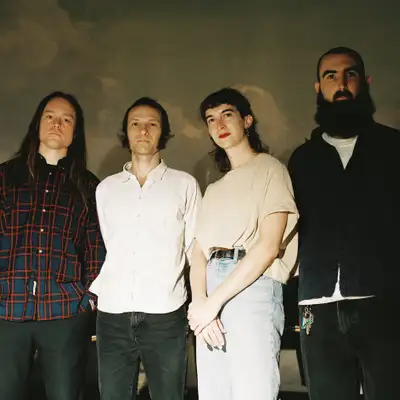
Lifepod is made with love in Newington Green, London. Like anything of value, it’s the outcome of a collective effort. Editing, audio engineering and production for Lifepod are by Laurence Green. The typography and graphic design are by Chris Lee. Thanks so much to Agriculture for permission to use excerpts from their song “Living Is Easy” as our theme music. I’m Adam Greenfield. Until next time, take care of yourself, take care of the ones who need you, and let them take care of you. Remember: we are the ones we’ve been waiting for.
Creators and Guests